Does This Tutorial Step Need Motion? Planning It for Kling 4.0
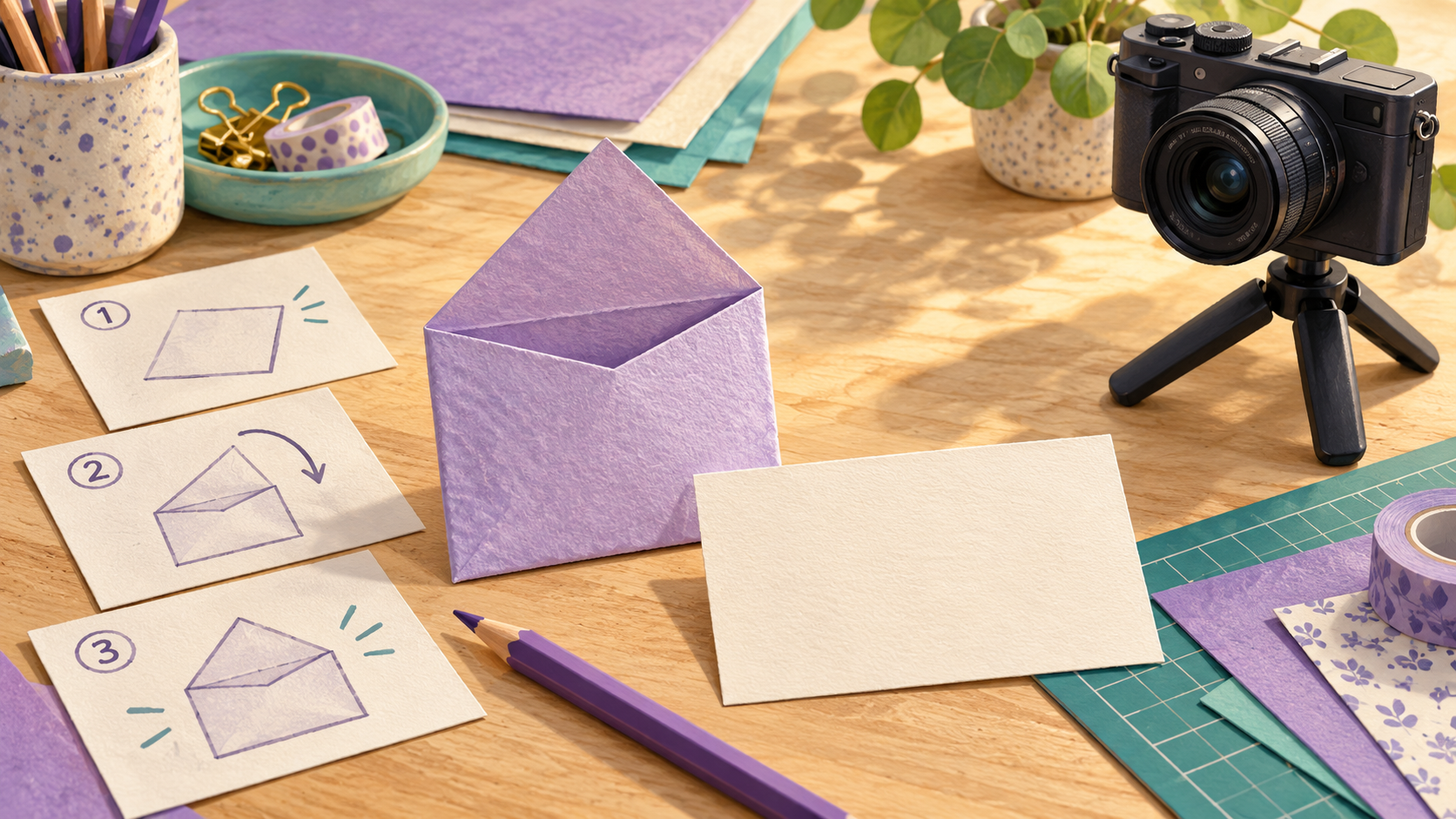
An instruction can be short and still leave the reader guessing. “Slide the card into the pocket” sounds clear until a picture hides the opening, the direction of travel or the point where the card should stop.
Before planning a Kling 4.0 clip for a how-to post, identify that uncertainty. You may need a better photograph rather than movement. You may need a real demonstration rather than an invented animation. The useful choice starts with the reader's question, not with the availability of a video tool.
We will use a small purple paper pocket and a blank card as a concept exercise. The AI-assisted illustrations explain how to plan instructional media; they are not a tested folding pattern or evidence that a particular handling technique works. Make and check the real object before teaching its construction or use.
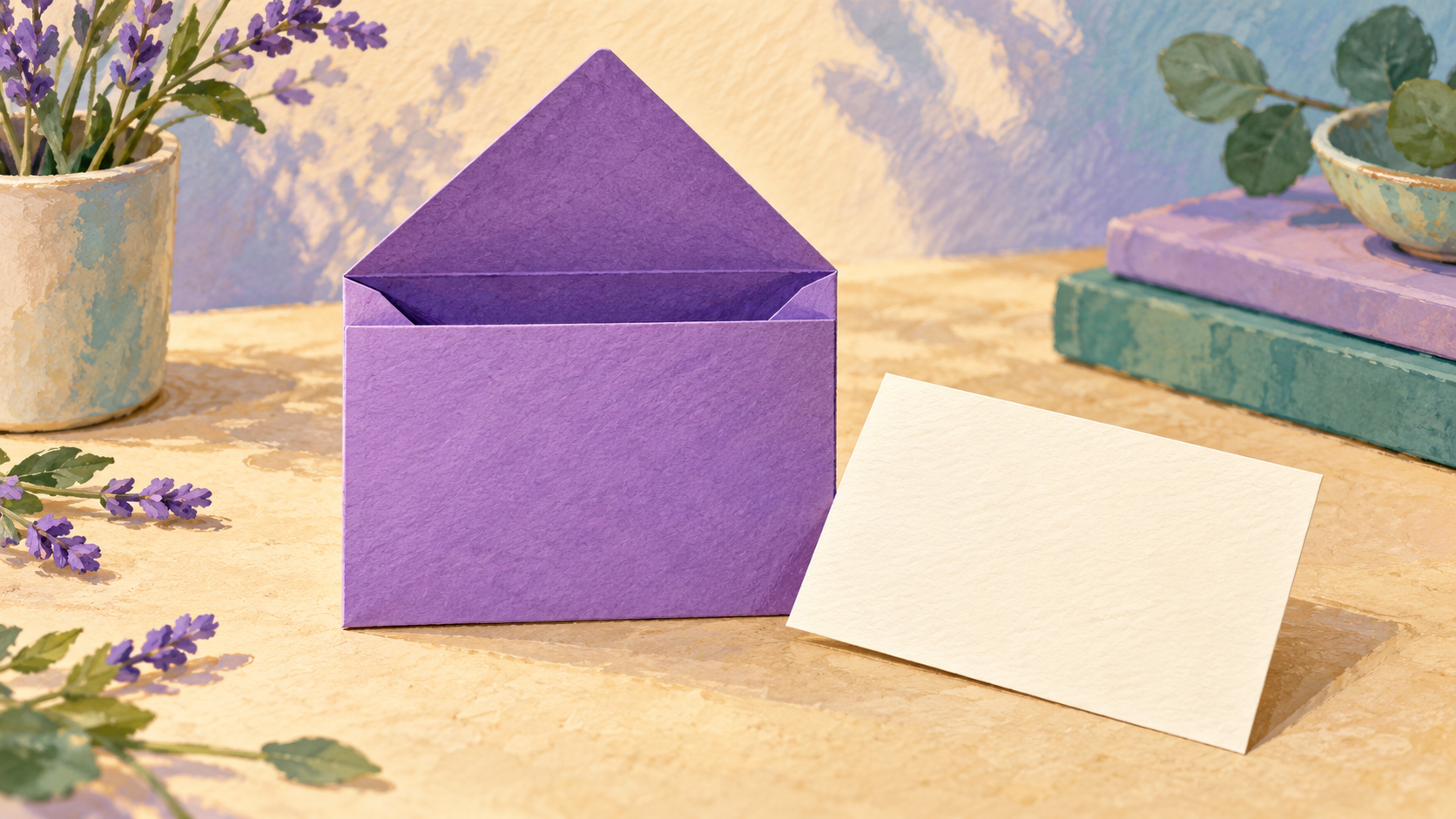
Write the question the picture must answer
Separate the whole tutorial from the one difficult step. A post about a paper organizer might need static pictures for dimensions, a finished view and a list of materials. None of those automatically benefits from animation.
The difficult step might instead be: does the card go behind the front panel, or under the flap? That question asks about a relationship during movement. A single finished image may conceal the answer because the card's edge is no longer visible.
Write the uncertainty as a sentence before planning media:
The reader needs to see the card enter the pocket opening, rather than slip behind the whole organizer.
Now you have a criterion for choosing the view. A beautiful close-up of the finished pocket does not answer it. A side angle that reveals the opening may do so immediately.
Try a better still before adding a clip
Start with the cheapest useful correction. Lift the flap, move the card slightly out of the pocket and show the opening clearly. A numbered arrow or a second photograph may resolve the ambiguity without motion.
A still is particularly useful when the reader needs time to inspect a position. They can compare it with the object in their hands without pausing a moving sequence at the right moment.
If the uncertainty is about the route between positions, motion becomes more relevant. For example, the reader may need to distinguish a straight slide from a turn. Choose a real demonstration when contact, force, alignment or precise hand placement is the lesson. An attractive generated movement is not evidence that an object can be assembled that way.
Define the interval that matters
For a short demonstration, state the beginning, the movement and the visible end. Keep unrelated actions outside the shot.
Beginning: The pocket opening is visible and the card is outside it.
Movement: The card travels into that opening while the camera remains in a useful view.
End: The card is seated, with enough of its top visible to show where it stopped.
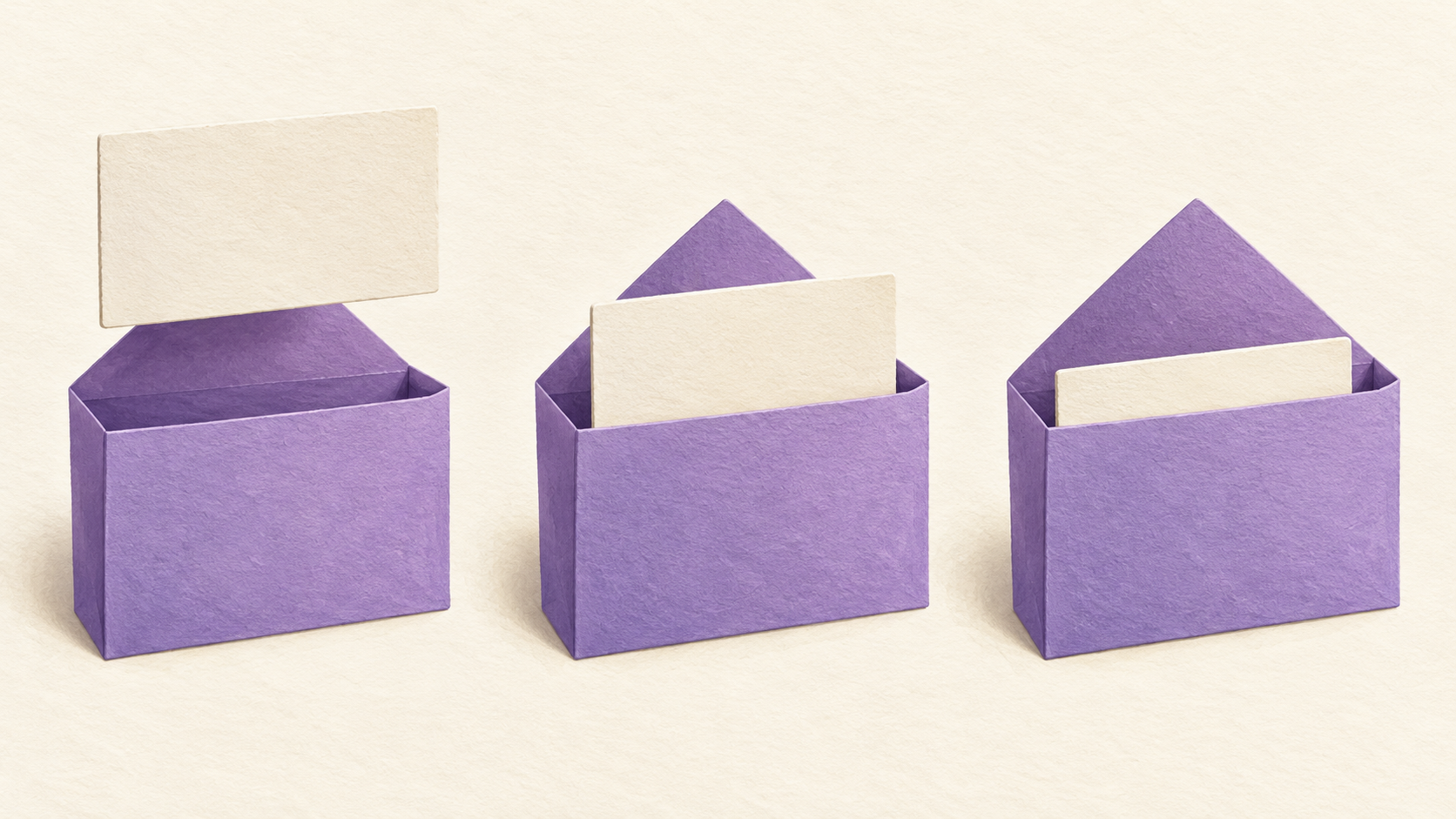
The important middle position is not merely a decorative transition. It must make the route visible. If a hand covers the opening throughout, the clip may show activity while withholding the answer.
When recording the actual object, repeat the action until you can see its relevant relationship clearly. If you plan a concept animation instead, use the same three states as a review aid and label the result as illustrative. Reject a version in which the card passes through a solid panel, changes size or appears inside the pocket without entering it.
Make the words and the image share one job
Write the explanation against those states. Three plain lines are enough for the exercise:
Find the opening behind the front panel.
Guide the card into that opening.
Stop when its upper edge remains visible.
These lines belong to a physically verified demonstration in a real tutorial. Here they illustrate the relationship an author needs to check, not a tested construction method.
Avoid narrating what is obvious while omitting the confusing part. “Here is the lovely organizer” adds little when the question is which layer receives the card. Use the caption to name the opening or direction the reader could misread.
Choose among a still, a recording and a concept
A practical selection rule is to ask what kind of evidence the post needs.
Use a still when a visible position, label or comparison resolves the question. Record the real action when readers need trustworthy contact, handling or results. Use a concept animation when the post is explaining an idea and the invented movement can be clearly distinguished from an actual demonstration.
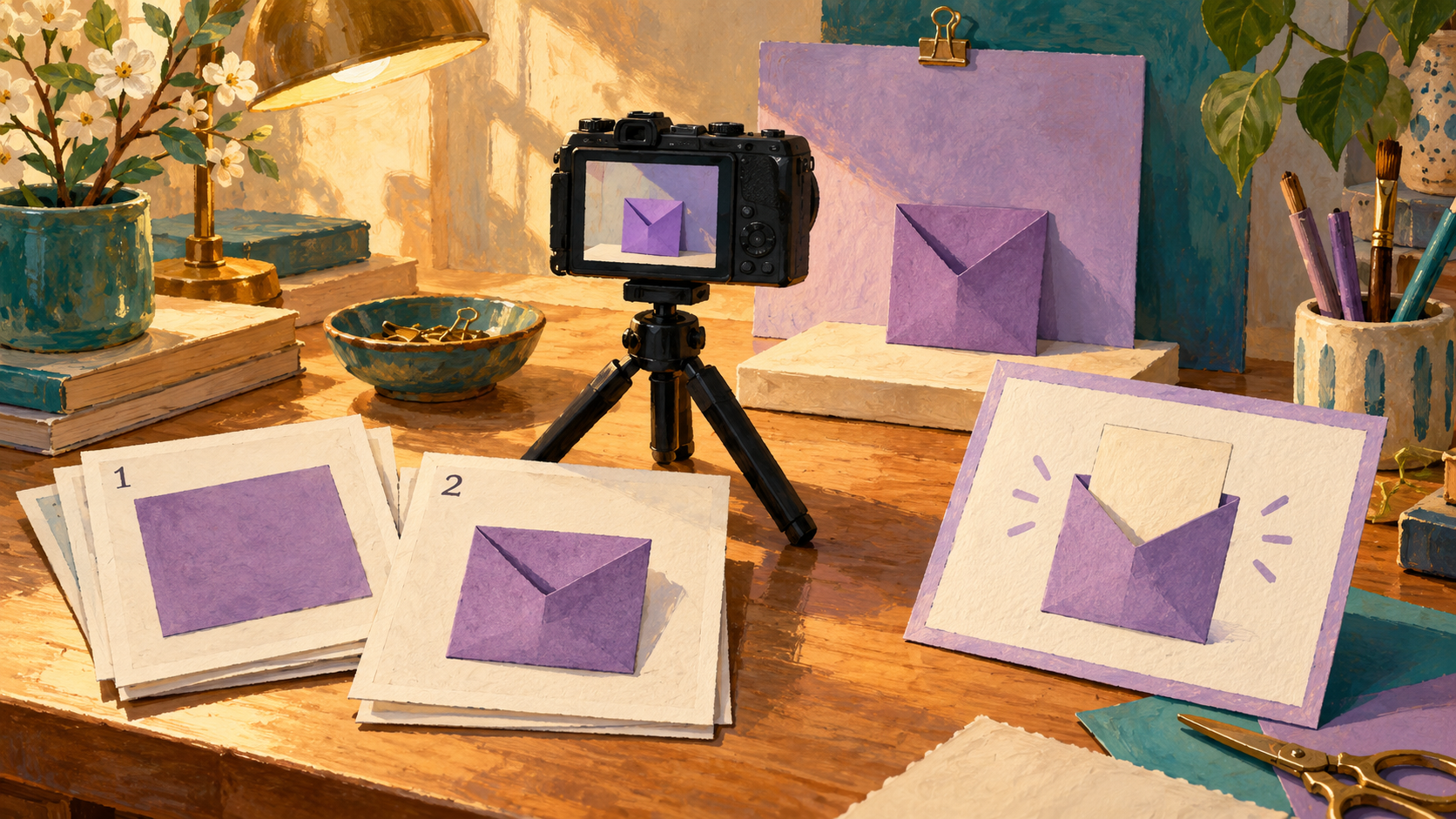
For a concept animation, take the beginning, movement and ending you have written to Flyne AI Kling 4.0. Keep the reader's question beside the brief while developing the video concept: can they see where the card enters and where it stops? Use those three states to assess the draft, then choose the clearest illustration, recording or animation for the tutorial.
Disclosure: This article is provided by the Flyne AI brand team.
Finish by asking a reader to explain the step from your media. If they can identify the opening, direction and stopping position, it is doing useful work. If they still need to guess, change the view or the explanation. Adding more movement will not repair a missing answer.